
Why We Overeat:Hunger, Appetite and the Search for Quick Fixes
10. September 2026
Why we overeat: what I shared in the Woman Net podcast
I was a guest of Nataša Pavlović in the Woman Net podcast. We did not talk about yet another meal plan, but about the real reasons why we gain weight, why we overeat, and why losing weight is so hard, even when we seem to be “doing everything right”. The conversation has been watched more than 190,000 times on YouTube, which tells me how many people are looking for answers beyond diets.
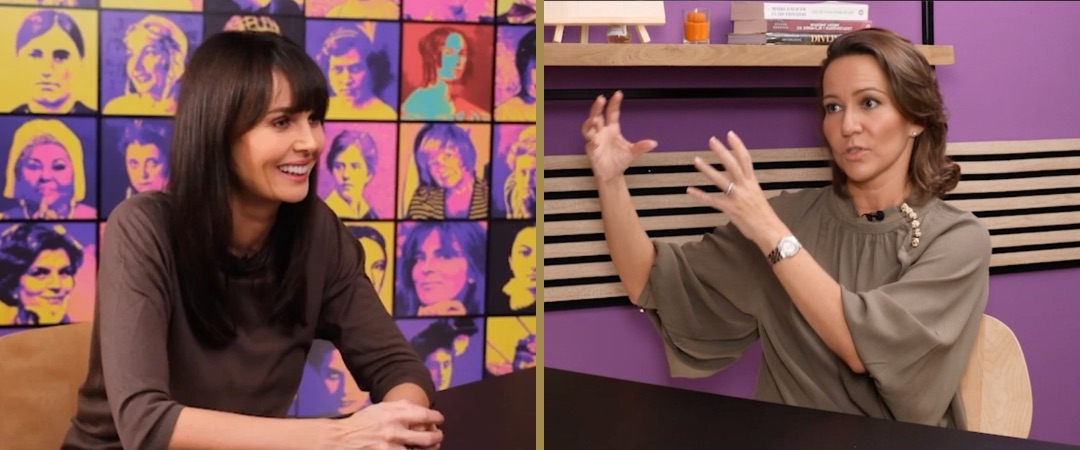
Watch the full podcast on YouTube
Here are the five messages I consider the most important.
1. Hunger is a need, appetite is a desire
Our physiological need for food is driven by hunger. When the body signals low energy, it triggers the impulse to eat. Once we have eaten, we feel satiation, or fullness.
This need is not the same as our emotional desire for food, which is governed by appetite. Here, we give food an emotional value and expect it, often unconsciously, to make up for a lack in some other area of our lives. We may feel anxious, tired, emotionally empty, uncomfortable in our own skin, depressed or under stress. Some of these feelings may not be recent at all, but go back to unprocessed experiences from childhood or adolescence.
In such moments, what we are trying to satisfy with food are not physiological needs, but psychological and emotional ones.
2. We ask “how”, but rarely “why”
Only a few people openly question the deeper causes of their eating behaviour. We deal with consequences, not causes. We say: “Yes, I know, I ate too much chocolate”, or “I know, I can’t stop eating at night”. But we rarely ask: “Why am I so attached to chocolate? Why am I looking for emotional comfort in food?”
Opening up to sensitive emotional issues is often painful, and the more it hurts, the more we avoid it. This is the core of the problem, and in most cases it remains unconscious.
3. Why we overeat even when we want to stop
People do not overeat because they consciously choose to. They overeat because, in that moment, they cannot stop.
It is like driving a car. You have the steering wheel in your hands, you are driving at a certain speed, and suddenly someone appears in front of you. You want to stop, but you have no control over the brake.
4. How we grow up shapes how we treat ourselves
The environment we grow up in is extremely important. If we are born into a home that lacks stability, empathy, time and dedication, we never learn to give ourselves proper time and attention. We become impatient with our own needs.
How can we be patient with ourselves when we do not feel we deserve it? How can we value ourselves if we were never valued? Instead, we put ourselves and our health in second or third place, and settle for a “quick fix”.
5. Why quick fixes are so attractive
This is exactly why “overnight success” programmes are so popular. They speak to people who struggle with self-control, impulse regulation and patience, including patience with themselves, and who are therefore strongly drawn to promises of fast results.
So before jumping to solutions that stay at the physical level, a new diet or a new fitness programme, it is worth taking a moment to look inwards and to understand the emotional dynamics behind our eating behaviour.
From “sick care” to health care
Obesity is not only about nutrition and exercise, but also about psychology and emotions. Very often, the real source of the problem is not food itself, but our emotional attachment to it.
Our medical systems still focus mostly on “sick care” rather than “health care”: they treat us once we are ill, but do little to help us stay healthy. Real prevention means looking at the whole person, including our emotions and our relationship with food, long before illness begins.
In their own words
Many viewers left comments under the podcast. Here are a few of them (translated from Serbian, with the original below).
“I have listened to so many podcasts on weight loss, but this conversation is on a completely different level. Depth, precision and clarity without oversimplification, which is rare. No instant solutions, no empty promises, but an understanding of why the body and mind do what they do. This is content that changes perspective, not just weight.” „Slušala sam zaista mnogo podcasta na temu mršavljenja, ali ovaj razgovor je na potpuno drugom nivou. Dubina, preciznost i jasnoća bez banalizacije – retkost. Nema instant rešenja, nema prodaje magle, već razumevanje zašto telo i psiha rade to što rade. Ovo je sadržaj koji menja perspektivu, ne samo kilažu.” — YouTube viewer
“Finally, a true view of those of us who went through childhood traumas, and the traumas of dieting ups and downs. Bravo, and thank you for raising awareness.” „Napokon pravi pogled na nas koji smo prolazili kroz sve te traume iz detinjstva, a i traume kroz up and down sa dijetama. Bravo i hvala vam na osvešćenju.” — YouTube viewer
“I came back several times to listen again. Excellent guest! Thank you for the knowledge and the truth about obesity and weight loss.” „Vraćala sam se par puta da odslušam emisiju. Odlična gošća! Hvala za znanja i istinu o gojaznosti i mršavljenju.” — YouTube viewer
“This is such a useful video. A wonderful, knowledgeable guest.” „Ovo je tako koristan video. Divna i stručna gošća.” — YouTube viewer
“Big applause for the professionalism… great respect.” „Veliki aplauz za profesionalnost… veliko poštovanje.” — YouTube viewer
Nutrition, physical activity and emotions
This is why my work always brings together three pillars: nutrition, physical activity and emotions. Only when we look at all three can lasting change begin.
My warm thanks to Nataša Pavlović and the Woman Net team for this conversation, and to everyone who watched, listened and shared their experiences. If you would like me to speak at your event, podcast or organisation, write to me at melzer@equiliberty.org.