What Really Drives Obesity:Food, Movement… or Emotions?
10. September 2026
What drives obesity? What I shared at Longevity Science for All in Geneva.
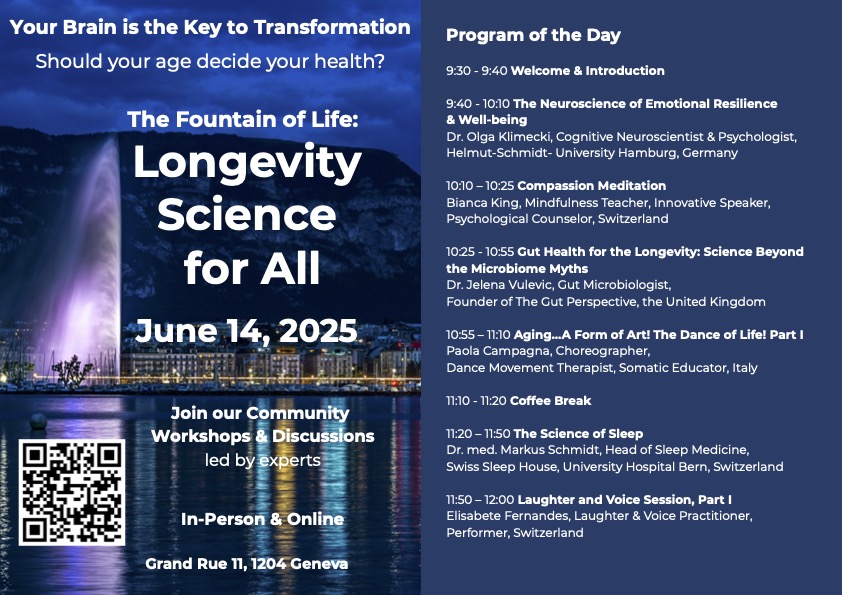
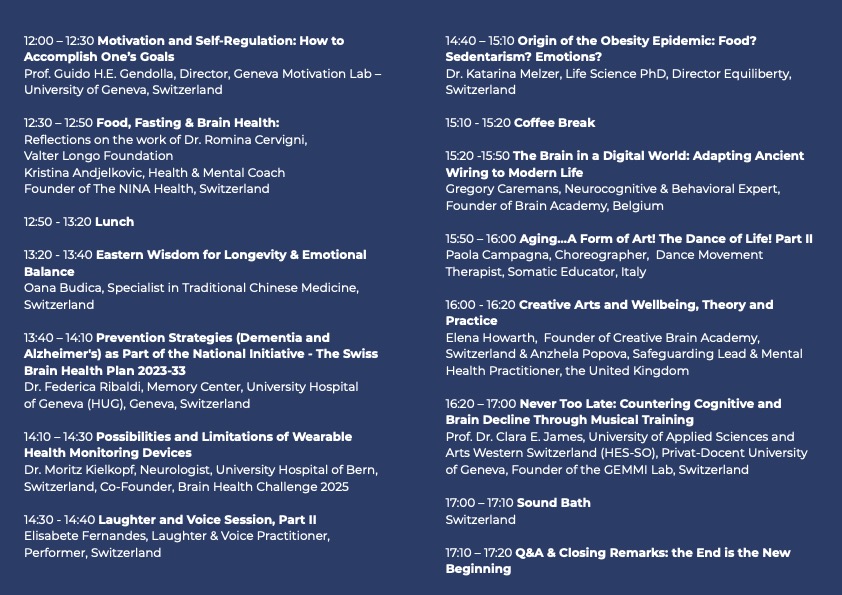
On 14 June 2025, Geneva hosted a special day: The Fountain of Life: Longevity Science for All, a summit aligned with the Swiss national initiative on Brain Health. Under one roof, neuroscientists, physicians, sleep specialists, psychologists, artists and movement therapists explored one question: Should your age decide your health?
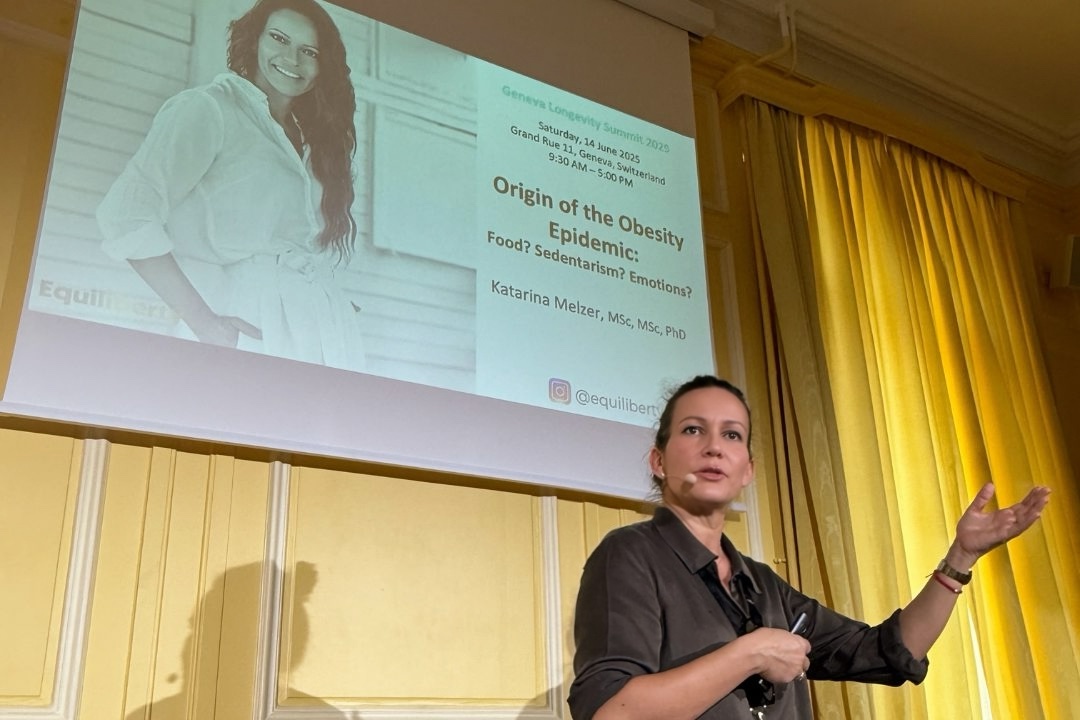
I was honoured to be among the speakers, with a talk titled “Origin of the Obesity Epidemic: Food? Sedentarism? Emotions?”
Here is what drives obesity, in my view.
The magic formula that doesn’t hold
We all know the rule: eat less than you expend, and you will lose weight. It is physics, the first law of thermodynamics, and it holds true. Yet since 1990, obesity has more than doubled among adults and quadrupled among adolescents. On the brink of the greatest medical achievements in history, we have become unhealthy people obsessed with a healthy lifestyle.
Genes cannot fully explain it. Our genetics have not changed in the last 50,000 years, while obesity exploded in just a few decades. Genetics may predispose us, but predisposition is not predetermination.

What drives obesity: three messages from my talk
1. Knowing HOW we gain weight is necessary, but it is not complete. We must also ask WHY. Food density, satiety, macronutrients, exercise intensity and duration all explain HOW we gain weight, and I spent years studying them. But WHY we eat when we are not hungry is the root cause, and the true starting point of any lasting treatment. Hunger is the body’s need. Appetite is often the mind’s desire: to relax, to escape fatigue, loneliness, stress or old pain.
In the 1980s, Dr. Vincent Felitti saw his patients lose a great deal of weight on strict diets, and then regain it. Their life stories revealed something unexpected: difficult childhood experiences were far more common than anyone had recognised. This led to the landmark Adverse Childhood Experiences (ACE) study. It showed that adverse childhood experiences are strongly linked to obesity, addictions and chronic disease decades later. Weight regain was not a lack of willpower: for many, food had become a way to cope.
2. Self-regulation is not innate. It is developed. Like a plant that needs sunlight, water and good soil, the brain builds its control system in relationship with its environment, from before birth through childhood. When that environment is stressful, self-regulation may not fully develop. Impulse control is then weaker, and resisting urges, including the urge to eat, becomes much harder. So instead of asking “What is wrong with you? Why can’t you stop eating?”, we should ask “What happened to you, that eating beyond your body’s needs became so hard to control?”
And this is not about blaming parents. Parents, too, carry their own wounds, from war, poverty, work or their own childhood. Every parent loves their child. The question is whether they had the emotional resources to show it reliably. We all pass on patterns, not out of bad intentions, but because we could not do better. Compassion between generations is part of healing.
3. Food can act as a reward, not just as fuel. The brain’s reward system, driven largely by dopamine, is less about having and more about seeking. When self-regulation is weak, this drive can attach itself to food, just as it can to alcohol, shopping or work. That is why “I just love chocolate” is not always passion. In passion, we are in charge. In addiction, the urge is in the driving seat.
Why what drives obesity matters for lasting health
We are bio-psycho-social beings. Our physiology is inseparable from our mind and our relationships. Unless managed holistically, emotional urges will always beat rational restraint. That is why my work always brings together three pillars: nutrition, physical activity and emotions.
Thank you, Geneva
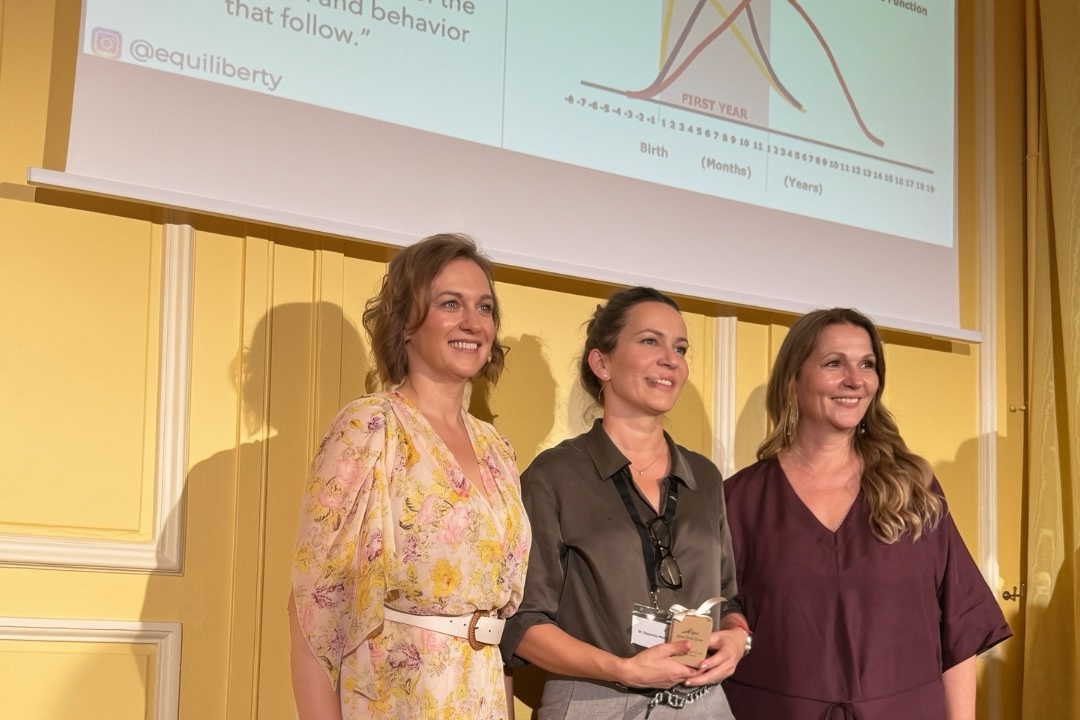
It was a joy to share the stage with such inspiring experts, from emotional resilience and sleep science to music, dance and laughter. Days like this remind me that longevity is not only about adding years to life, but life to years.
I look forward to the next opportunities to meet, learn and exchange.
If you would like me to speak at your event or organisation, write to me at melzer@equiliberty.org.
Be balanced, be free